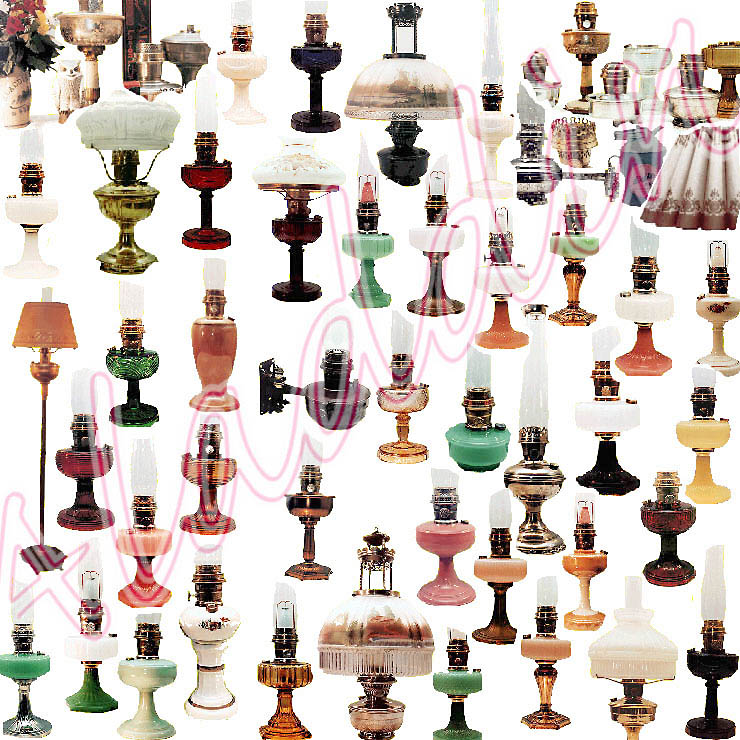
Aladdin lamps were made in far more forms than the standard table lamp. This page gathers the styles and special categories that fall outside the individual model pages — from bracket and hanging lamps to floor lamps, paper shades, and the intriguing color variations that turn up across many glass models.
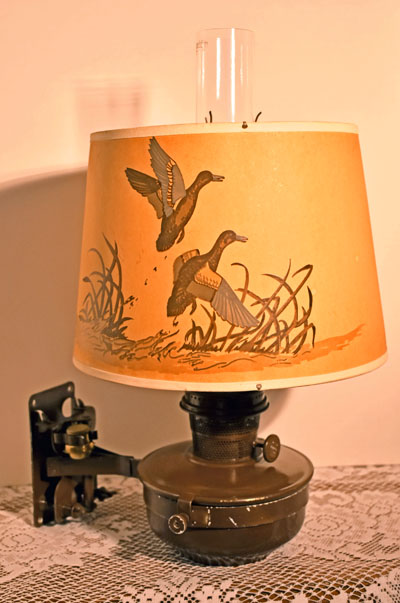

Aladdin bracket lamps were built for practicality as much as light — designed to mount to a wall and bring illumination exactly where it was needed. Available in many of the same fonts and finishes as the table lamps, they ranged from everyday household models to specialized versions like the ingeniously engineered caboose lamp, built to handle the rigors of life on the rails.
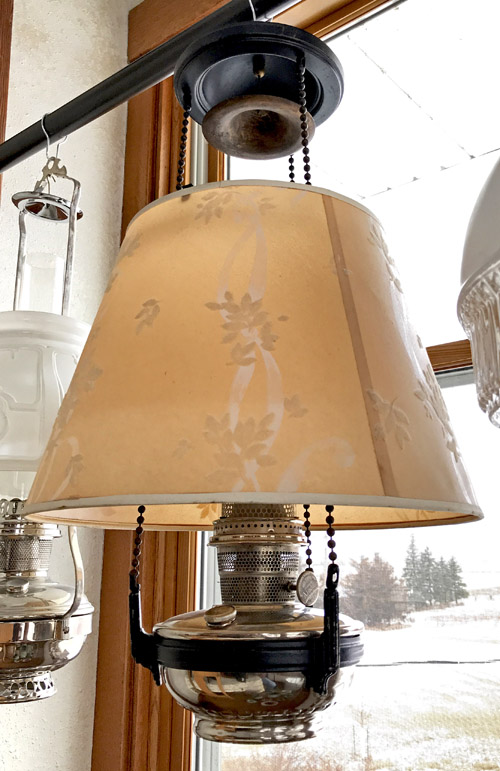
Aladdin hanging lamps brought both brilliant light and elegant style to the center of a room. Available across nearly all the early metal models — from the Practicus through the Model 12 — they were offered in a variety of frame styles and crowned with beautiful scenic glass shades that made them as much a decorative centerpiece as a source of illumination.
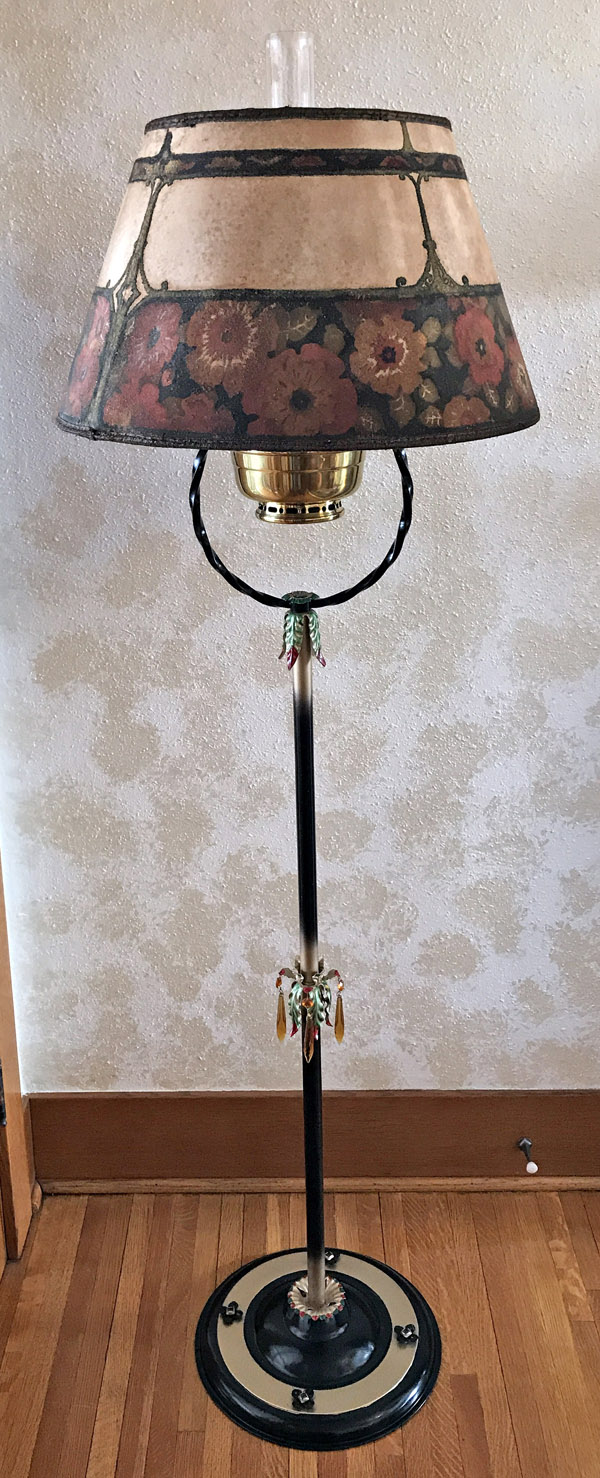
Aladdin floor lamps brought the same brilliant kerosene light to a grander scale, pairing functional illumination with striking paper shades that made them a statement piece in any room. Manufactured from 1915 through 1952, they went through many style evolutions and can be among the most challenging finds for collectors — especially with their original finish and shade intact.
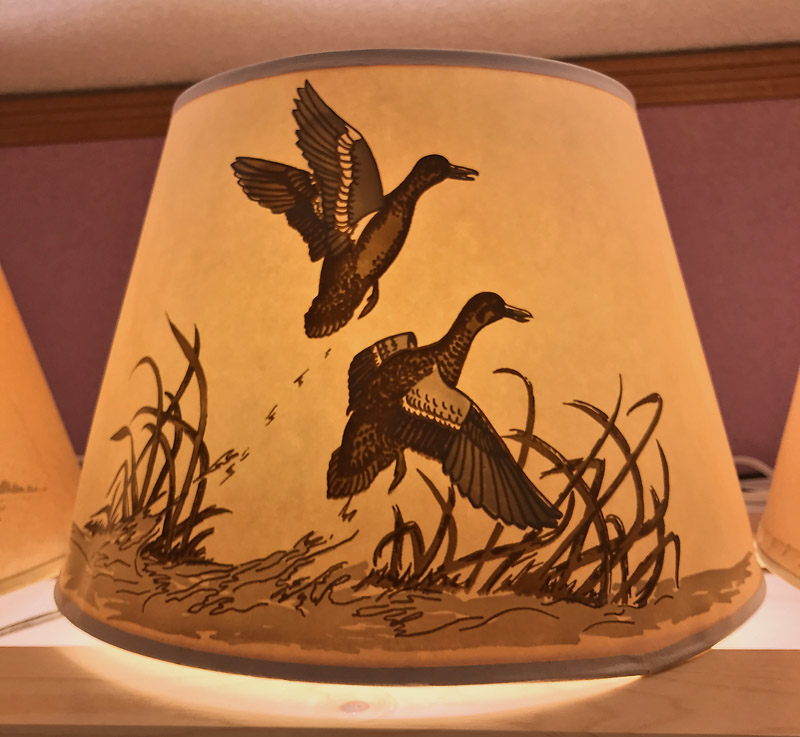
Whip-o-Lite was Aladdin's trademarked paper shade material, introduced in 1933 and engineered to be translucent, washable, and heat-resistant — a significant step up from the parchment shades of the era. Often beautifully hand-decorated, these shades are among the rarest finds in any Aladdin collection today, with surviving examples in good condition being a true treasure.
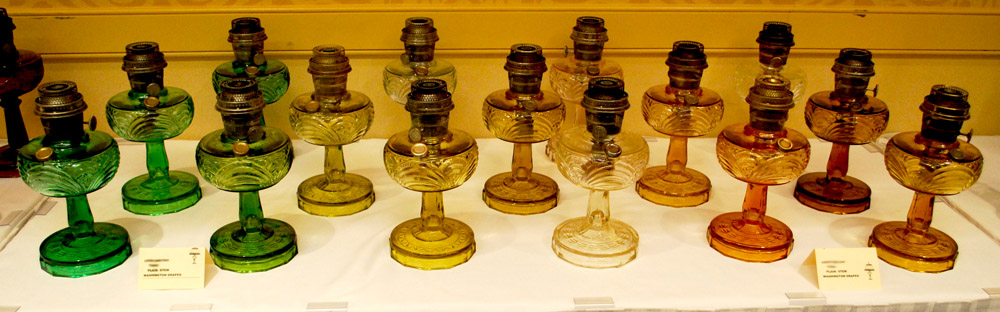
Not all Aladdin lamps that look different were meant to be different — color variations occurred across many glass lamp styles, producing unexpected tints of pink, blue, smoke, and more beyond the cataloged colors. Rare and largely unexplained, these subtle to striking departures from the original colors make them among the most distinctive and sought-after finds for collectors today.
Click to zoom in!
