

The Corinthian family of lamps is the largest and most diverse family of Aladdin lamps. It includes seventeen different lamps if you count those that are the same color but have a different type of metal connector. (You will only see fifteen here since I didn't include the lamps where the only difference between them is the metal connector.)
The solid colors include amber crystal, green crystal, and clear crystal glass, along with white moonstone, "apple green" moonstone, "jade green” moonstone, and rose moonstone glass. The white moonstone, and clear crystal fonts were then used to create several combinations consisting of: clear font/green foot, clear font/amber foot, white moonstone font/rose moonstone foot, and white moonstone font/jade green foot.
A dark crystal foot was also used to create a clear font/dark foot, and a white moonstone font/dark foot combination. This so called "black crystal" base when held up to a strong light source will reveal it isn't really black, but rather a very dark shade of amethyst, cobalt, green, or red. The cobalt foot seems to be the one most sought by collectors.
To make the group even more diverse, there are three different styles of metal connectors used to connect the fonts to the feet. Two are "white metal" connectors. One has a scalloped design around its rim, while the other has a ribbed design. The third style is a smooth brass connector.
The Corinthian Aladdin lamps were molded in two pieces, and then glued together with the aid of the metal connectors between the font and the foot. The glue used in this process added an inherent weakness to the Corinthian family of Aladdin lamps due to it being heat sensitive. It is believed to be "hide" glue that was widely used in industry at the time. If the lamp is left in the sun, or in close proximity to a direct heat source, the glass will heat up causing the hide glue to soften. If it softens enough the two pieces of glass may separate. The heat from the burner being lit, however, will not cause the joint on the lamp to heat up.
Another problem with this family of lamps is that the base of the foot often has a thin layer of glass running around the bottom edge. This glass "flash", as it was referred to, should have been ground off at the factory, but was all to often left in place to create an area that is very easily chipped or broken. Luckily most of the bases do appear to have been ground smooth. When you are looking at a Corinthian lamp be sure to check it for "flash". It can easily be recognized, and felt, by running your finger lightly along the edge of the base, but be careful as the sharp edge can cut you if you apply too much pressure while doing it. On close inspection you can also see the thin jagged glass protruding out from the thicker edge of the base.
If you should find a good lamp that has this troublesome area be careful not to bump it when moving the lamp around, as doing so is what causes most of the chips that are found on the edge of the foot. The “flash” glass can be sanded off, but care must be taken not to do anything more than smoothing out the edge. You do not want to mark or disturb the thicker glass edge of the foot.
Click image to zoom in
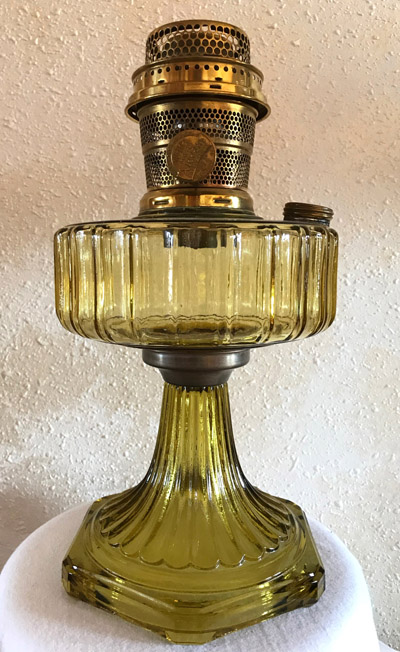
Amber Crystal Corinthian Aladdin lamp

Click image to zoom in
Dark Amber Crystal Corinthian Aladdin lamp
The Dark Amber Crystal is a color variation of the B-101 Amber Crystal lamp. While the price guide does not show a light and a dark amber crystal Corinthian they do exist, as do other variations of the amber color. Two other color variations of the amber crystal Corinthian are lamps with a green hue, or those with a red hue.

Click image to zoom in
Green Crystal Corinthian Aladdin lamp. Like many other Aladdin lamps, there are color variations of this lamp. It can be lighter or darker in color.

Click image to zoom in
Olive Drab Crystal Corinthian Aladdin lamp
The Olive drab color is actually a color variant of the green crystal Corinthian, but it is distinctive enough that it was given its own designation in the "Aladdin Collectors Manual and Price Guide #24" by The National Association of Aladdin Lamp Collectors, Inc.
Click image to zoom in
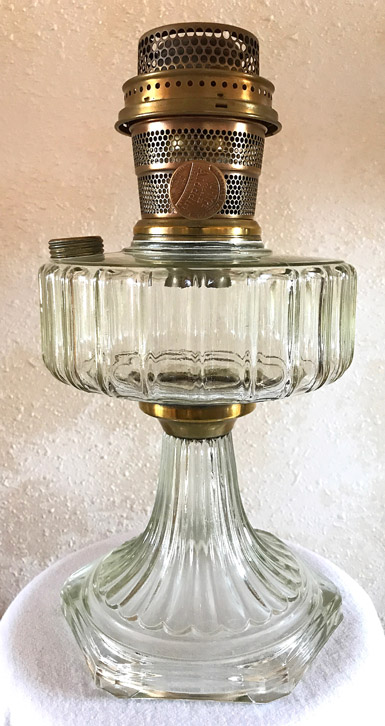
Aladdin clear crystal Corinthian lamp.

Click image to zoom in
Clear Crystal over "dark" foot Corinthian Aladdin lamp. While the foot appears to be black when exposed to high intensity light you will discover it is actually not black, but rather a very dark red, cobalt, green, or amethyst. The most sought after color on the foot by collectors is the cobalt blue.
Click image to zoom in
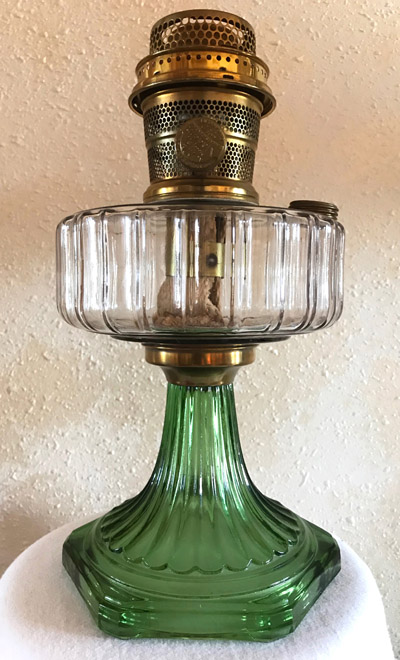
Clear Crystal over Green Crystal Corinthian Aladdin Lamp
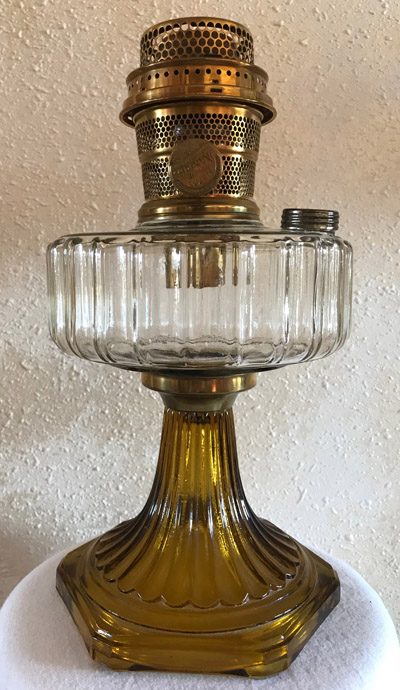
Click image to zoom in
Clear Crystal over Amber Crystal Corinthian Aladdin lamp
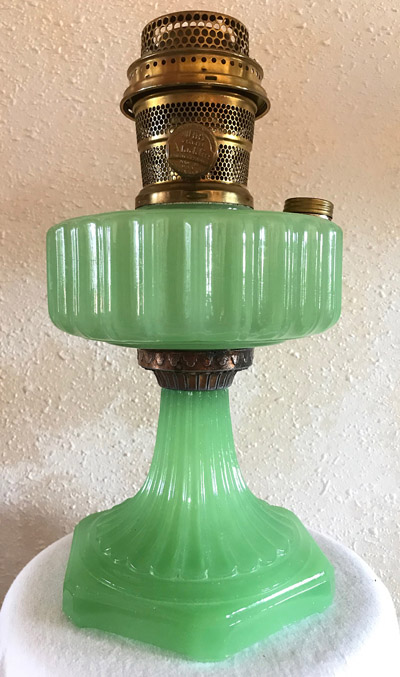
Click image to zoom in
Apple Green Moonstone Corinthian Aladdin lamp
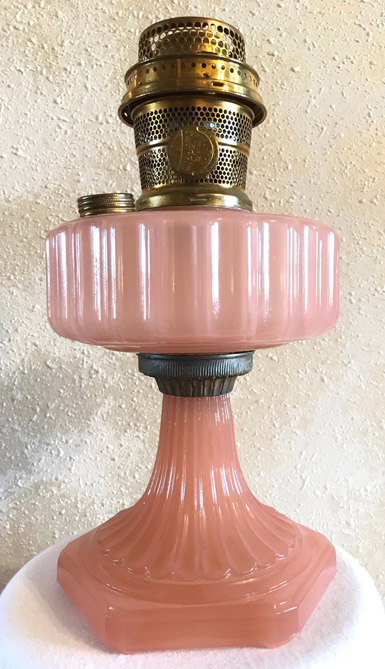
Click image to zoom in
Rose Moonstone Corinthian Aladdin lamp
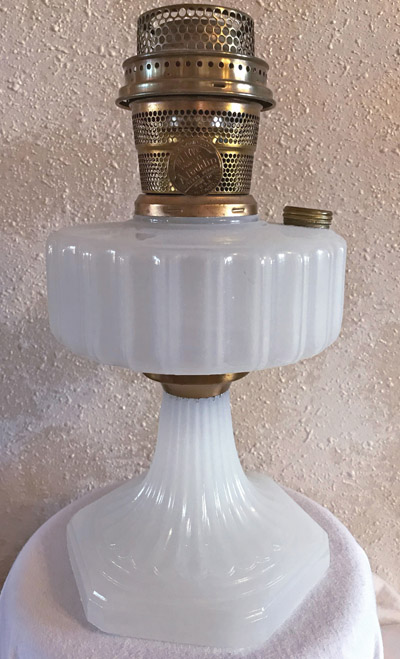
Click image to zoom in
White Moonstone Corinthian Aladdin lamp
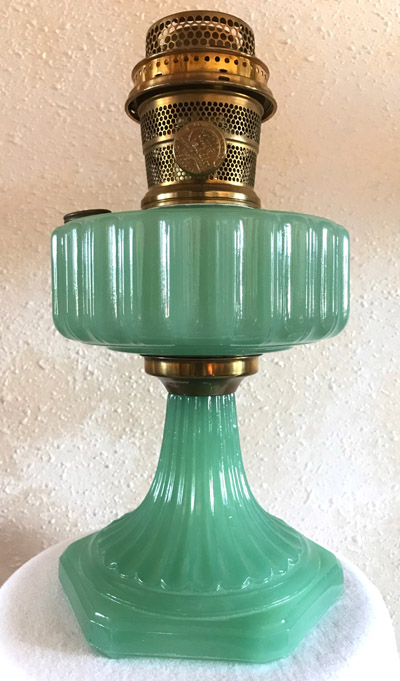
Click image to zoom in
Jade Green Moonstone Corinthian Aladdin lamp
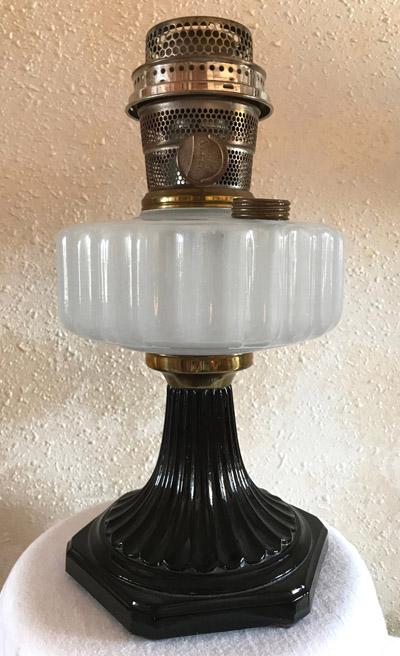
Click image to zoom in
White Moonstone over Black Corinthian Aladdin lamp
Remember, the foot is not actually black on these lamps but rather a very dark shade of red, cobalt, green, or amethyst.
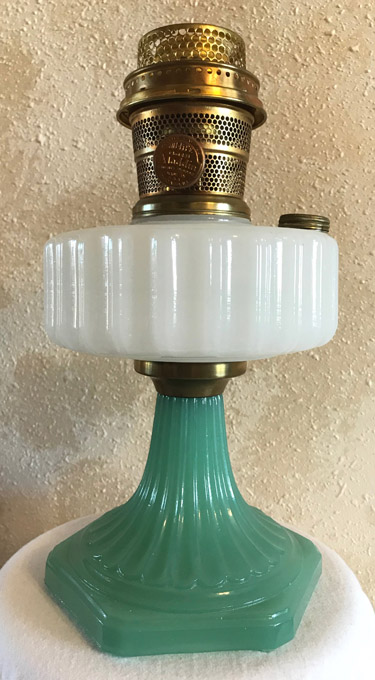
Click image to zoom in
White Moonstone over Green Moonstone Corinthian Aladdin lamp
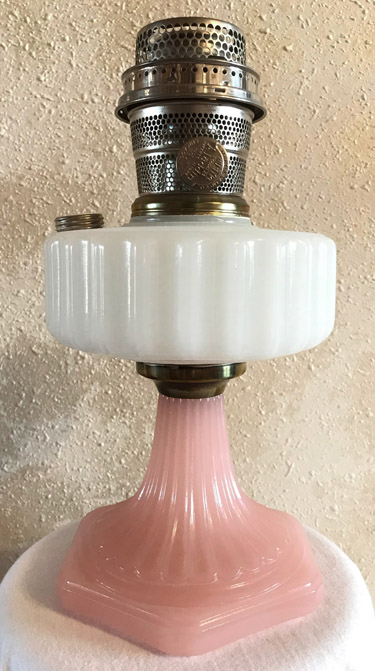
Click image to zoom in
White Moonstone over Rose Moonstone Corinthian Aladdin lamp
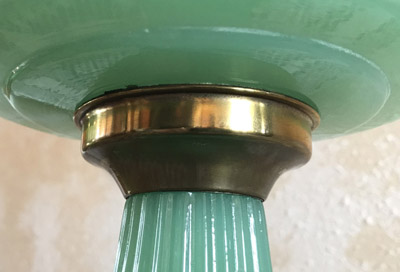
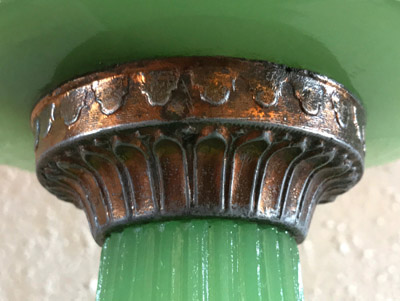
The brass connector is on the left, while the "cast" or white metal connector is on the right. Glue was used to fill the connectors and secure the font to the foot of the lamp. The glue is heat sensitive! If the glue is allowed to heat up it will lose it's adhesive quality and the two parts will separate, so be very careful when handling these lamps if they have been exposed to a heat source. I have seen them separate at auctions where they were left sitting on a hay rack in the hot sun.
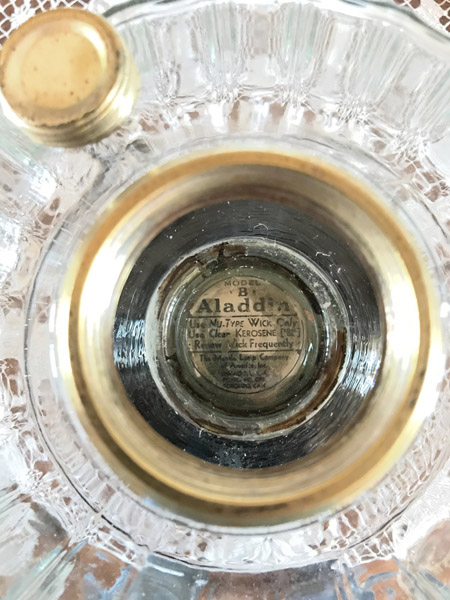
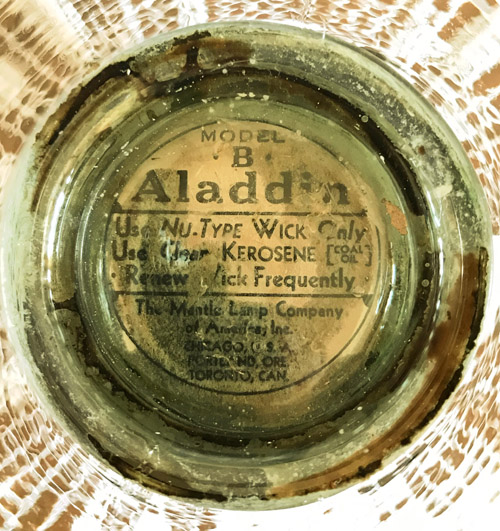
A few of the clear crystal font Corinthians have been found to contain labels that were inserted between the font and the foot. Evidently they were inserted at the time the two parts were glued together using the metal connector. Only a small percentage of these lamps have such a label. The one pictured here is a clear crystal font over a black foot.
Another interesting note to this particular lamp is that while it is commonly referred to as "clear over black," the foot itself is not always black. It can be dark green, dark blue, amethyst, or dark red as well. The glass, however, is so dark in all the colors as to appear black. It takes a high intensity light directed into the bottom of the foot to actually determine the true color of it. The variance in color does not affect the collector value.
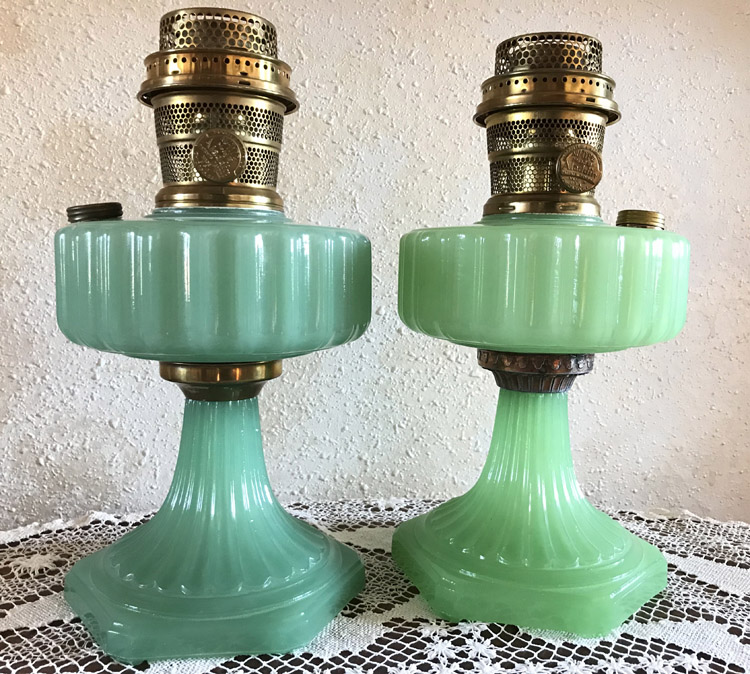
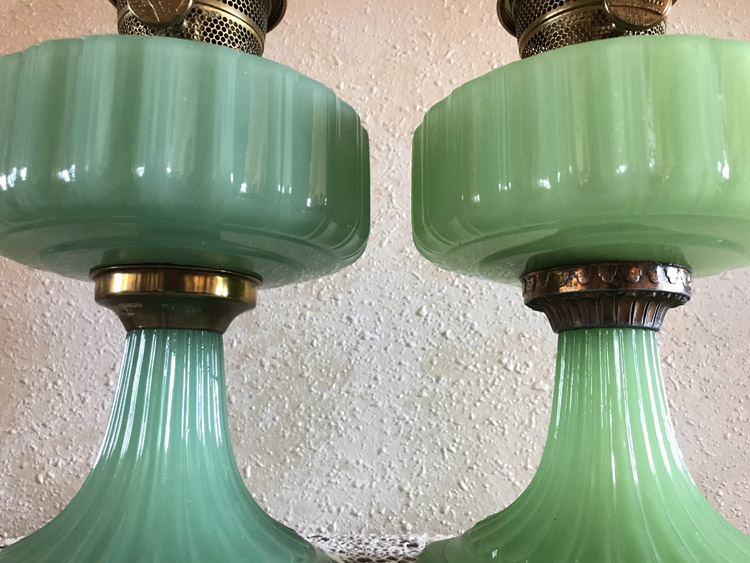
New collectors are always confused by the terms "jade" or "apple" green when it comes to the green moonstone Corinthian lamps. It's much easier to see the difference when the lamps are side by side as they are in this picture. The "jade" green moonstone Corinthian is the lamp on the left here, while the "apple" green moonstone Corinthian is the lamp on the right. The jade lamp has more of a blue tint to the green color, while the apple has more of a yellow tint. If nothing else, try to remember the darker lamp is the Jade.
