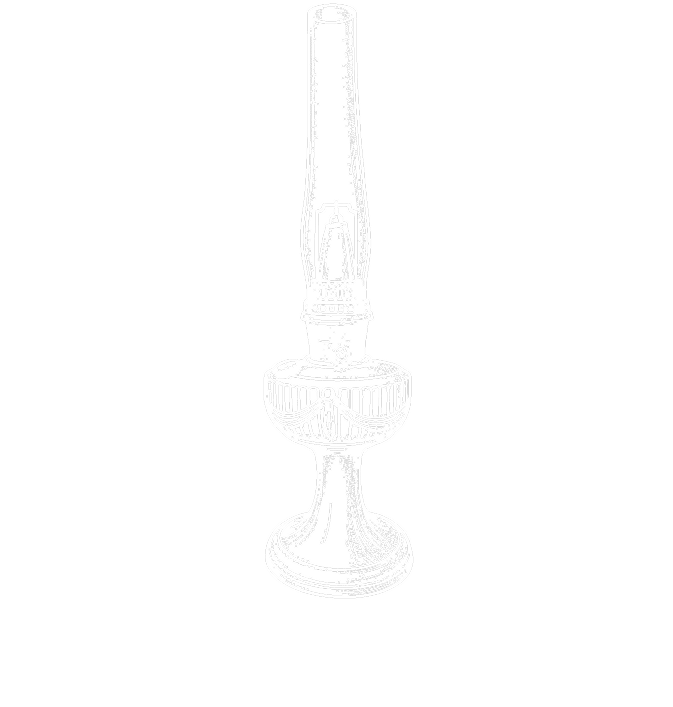


The Washington Drape is one of Aladdin’s most enduring lamp designs. It was produced with four distinct stem and base styles between 1939 and 1953. Each style reflects a design evolution of the series — from the earliest round base and filigree stem lamps of 1939–1940, to the short-lived bell stem, to the long-running plain stem that became the most widely recognized of all Washington Drape lamps. All were offered in clear, amber, and green crystal, but variations in those colors could create a collection all of its own. The color variations, however, are more prevalent in the plain stem lamps, probably due to their longer period of production.


The Washington Drape Round Base is the first lamp in the Washington Drape series, produced in 1939. Standing 8½ inches tall without the burner, it features metal burner threads fused into the glass which was a construction detail carried forward into the early filigree stem lamps of 1940.

The Washington Drape Filigree Stem lamps were produced in 1940 and are distinguished by decorative leaf detailing where the stem meets the base. At least two distinct molds were used, resulting in differences in leaf shape and thickness. The filagree stem lamps with fused metal threads, which were carried over from the earlier round base design, are considered to be the earlier production examples.

The Washington Drape Bell Stem lamps were produced for approximately one year in 1941. Their factory model designations were never officially confirmed. Also they do not appear in known sales brochures, which helps to make them among the more mysterious and sought after lamps within the Washington Drape series.

The Washington Drape Plain Stem lamps were produced longer than any other style, making them the most widely recognized of the Washington Drape series. They were originally marketed in clear, amber, and green crystal, but the series also included a clear crystal lamp manufacture with, and without, an oil fill. There are two distinctive designs on the underside of the base: a “crow’s foot” or a “V pattern" design. Color variations in this series can make a very interesting collection all on its own.
