

The Tall Lincoln Drape lamps are a favorite with collectors, and the Alacite Tall Lincoln Drape was the most popular kerosene lamp in Aladdin's history.
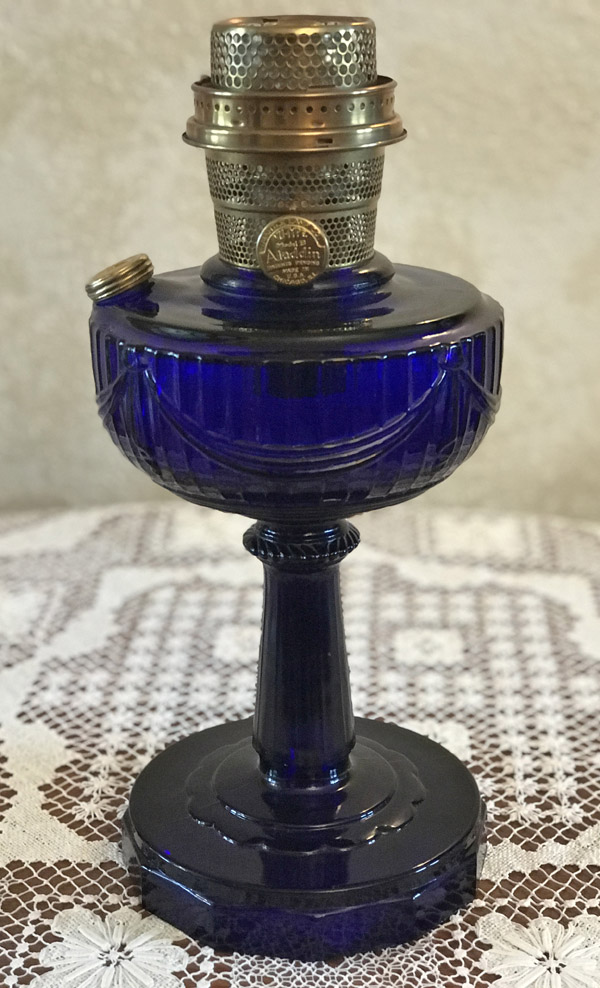
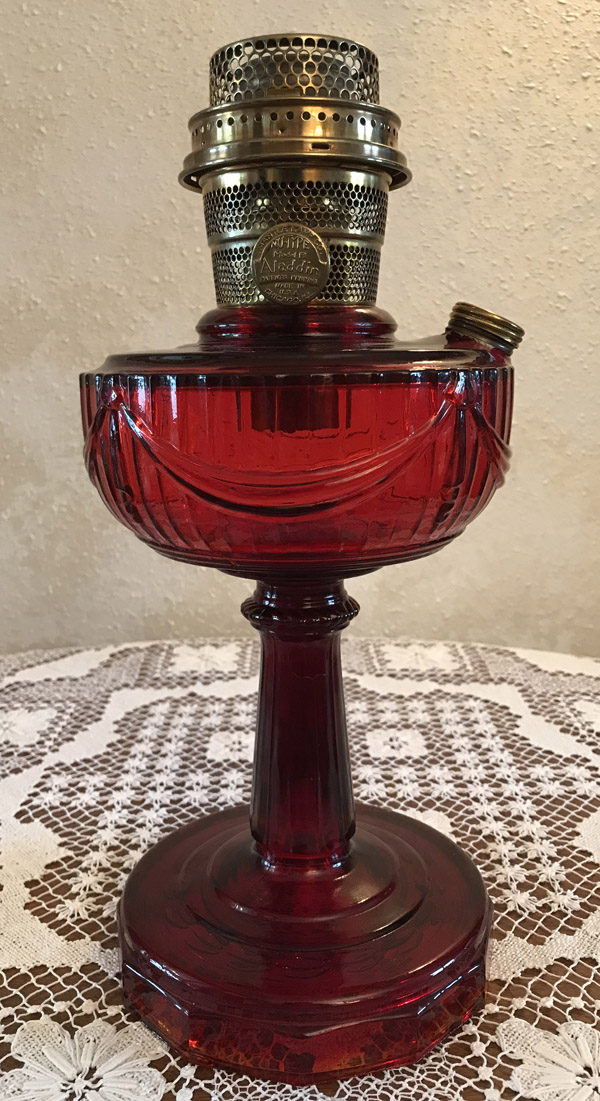
Color is a big consideration in the red and blue lamps. The darker the ruby red or cobalt blue, the more sought after they become.
You need to be familiar with the features of the Tall Lincoln Drape lamps since they have been reproduced.
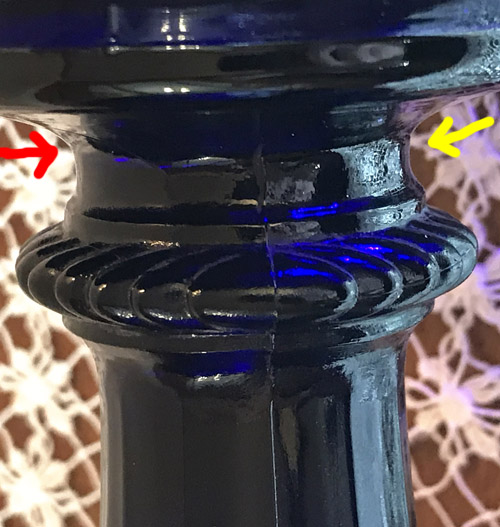
The old lamps were made in one piece, while the bowl and foot of the newer lamps were molded separately then glued together. The joint will be visible on reproduction lamps just above the filigree design on the pedestal (or stem). The angle of the oil fill may also be used in identifying reproduction lamps, but this can’t be relied upon by itself since some reproduction oil fills are a perfect match to the original. The pattern on the underside of the foot however, to my knowledge, has never been recreated on a reproduction lamp. Show me!
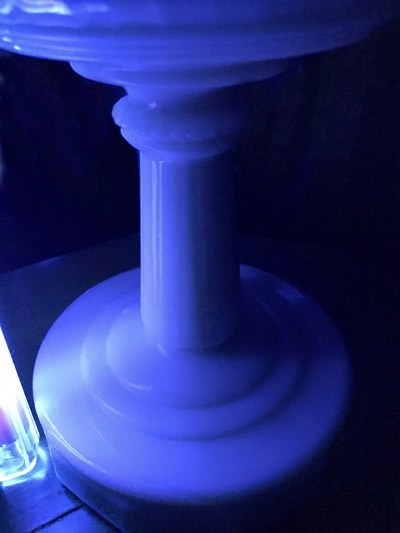
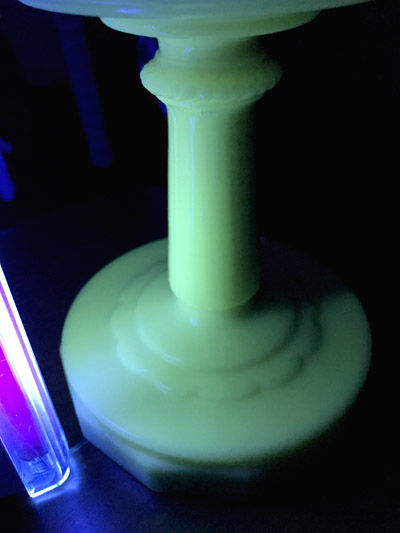
The Alacite lamps used two different glass formulas. Those produced prior to World War II contained uranium in the glass formula, which was later omitted due to regulations imposed by the government in the war effort. The old formula Alacite glass will glow yellow, or green, when exposed to a black light, while the new formula lamps only reflect the black light and appear purple or blue. Show me again!
Click image to zoom in
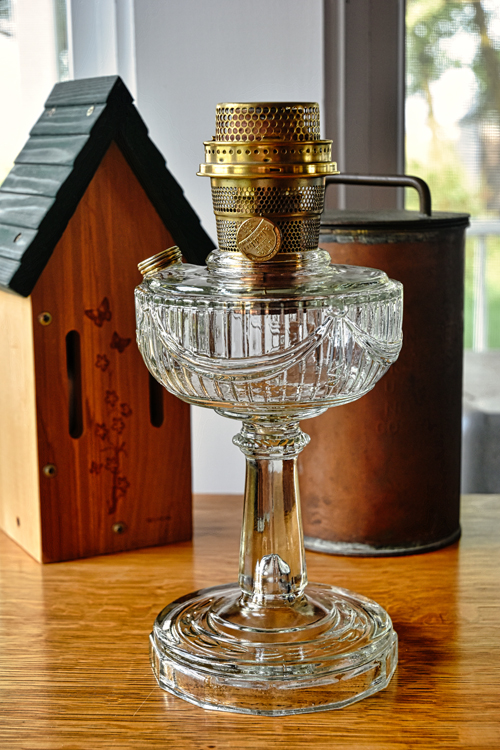
Original Aladdin clear crystal Tall Lincoln Drape lamp.

Click image to zoom in
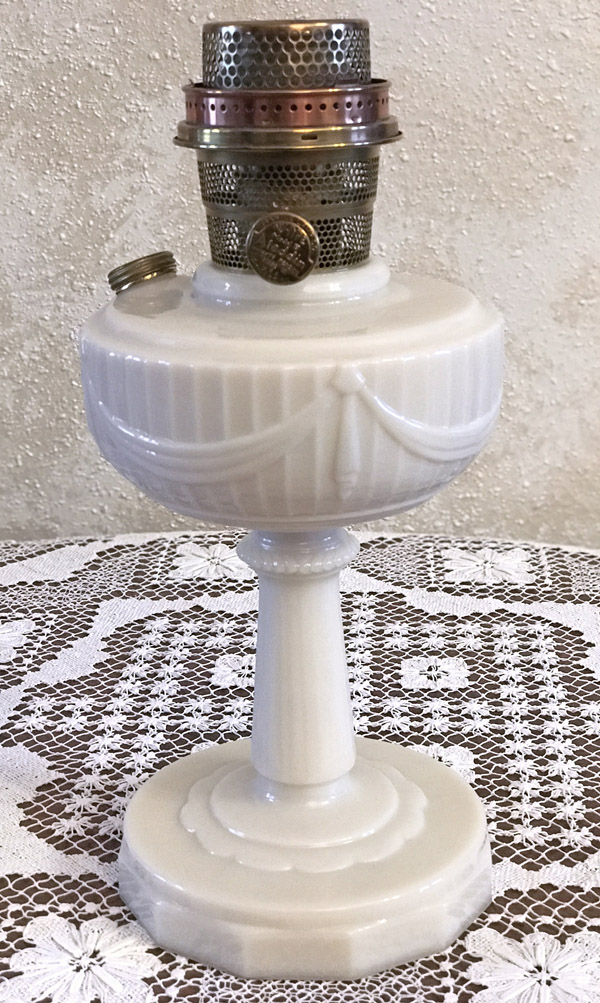
Aladdin Alacite Tall Lincoln Drape lamp.
Click image to zoom in
Aladdin Alacite Tall Lincoln Drape lamp with scallop foot. Only 15% of the Alacite lamps had the scallop foot design on the base, and due to the lower production number, there are fewer Alacite scallop foot lamps than there are blue cobalt scallop foot lamps. Yet the cobalt blue scallop foot Tall Lincoln Drape lamps command higher prices. Rarity in itself apparently does not control price.
Click image to zoom in
Original Aladdin blue cobalt, plain foot, Tall Lincoln Drape lamp.
Click image to zoom in
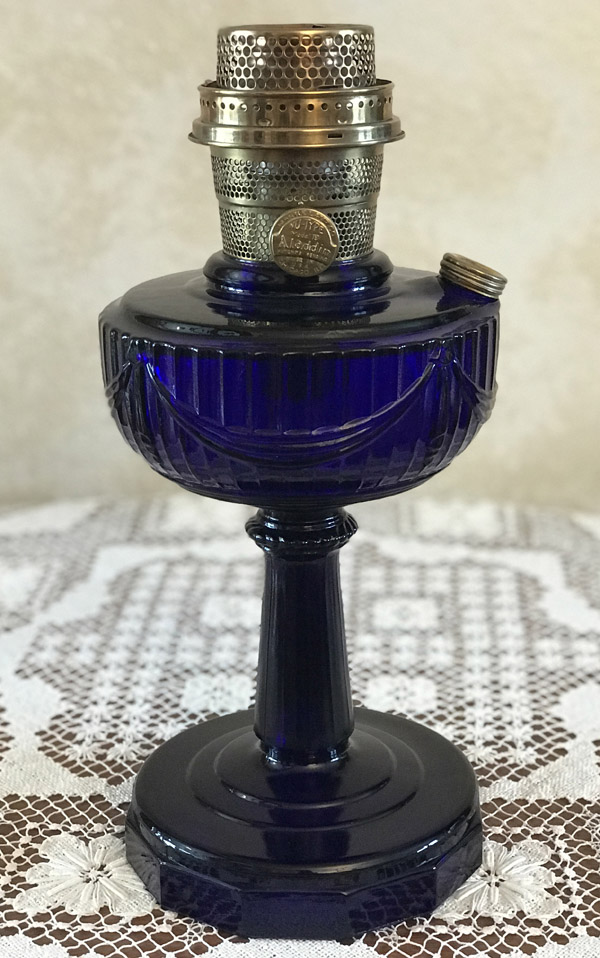
Aladdin cobalt blue, scallop foot, Tall Lincoln Drape lamp.
Click image to zoom in
Original Aladdin ruby crystal Tall Lincoln Drape lamp.
Click image to zoom in
Click image to zoom in
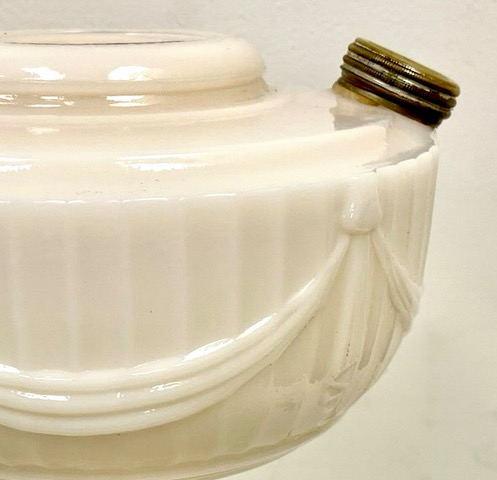
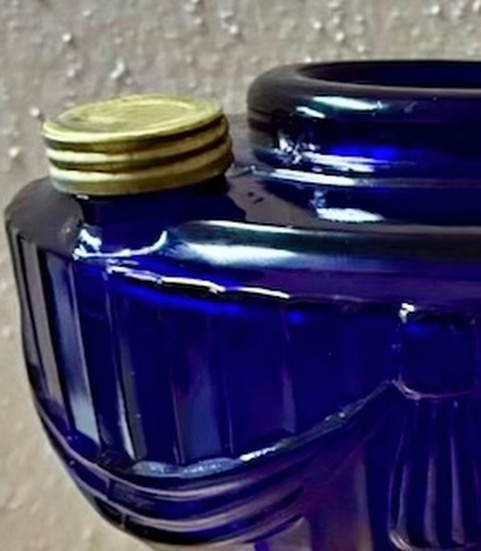
The oil fill may differ on the original and the reproduction lamps. The lamp on the left is an original Aladdin. Note the angle of the oil fill compared to the blue cobalt reproduction to the right. This is one item to check when trying to verify authenticity of a Tall Lincoln Drape lamp, but not all reproductions are this easy to identify. Some have oil fills that closely resemble those of the original, so do not use this as your sole means of identification.
Click image to zoom in
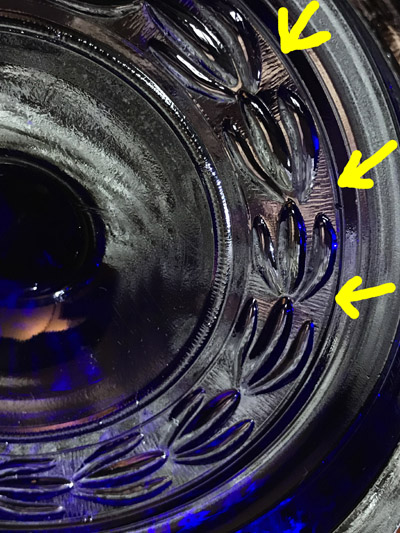
This picture shows the design on the underside of the foot of a blue cobalt Tall Lincoln Drape. The prominent markings in the center of the band are referred to as the "crows foot" design and while this design can be found on both the original and the reproduction Lincoln Drape lamps, it is the fine lines pointed out by the arrows in this picture that can help you distinguish between them. This pattern of fine lines within the band containing the crows foot design will only be found on the original Tall Lincoln Drape Aladdin lamps. The strong light in this picture pronounces them, but they can be very hard to detect on some lamps. A magnifying glass with a built in light is a fantastic tool to have along when looking for details like this.
Click image to zoom in
This is another way to check for authenticity of the Tall Lincoln Drapes! The reproduction lamps were made in two pieces, then glued together. You can see the joint between the fount and the stem on such lamps. Again it can be hard to detect without good lighting, but you should be able to feel the joint with a fingernail, or a knife blade, even if you can't see it. If you find a joint at this location the lamp is a reproduction plain and simple! Looking at the photo to the left you can see that this is a one piece original lamp. If you look in the area where the arrows are pointing you can see there is no joint between the foot and the font.
Click image to zoom in
Click image to zoom in
The black light is the best tool to use for identifying whether Alacite is new or old formula. The old formula will glow yellow or green as illustrated by the scallop foot lamp on the right in this picture, while the new formula will only reflect the black light causing the lamp to appear blue or purple as shown by the Alacite plain foot lamp on the left. Small portable black lights can easily be found online or in antique malls.
